Showing posts with label african american money. Show all posts

Wednesday, May 12, 2010

Lawrence Taylor Should Only Be Judged After We see the Evidence

lawrence_taylor_rape

by Dr. Boyce Watkins, The Institute for Black Public Policy

Former New York Giant Lawrence Taylor has had a life that has been shameful, exciting, devastating and amazing.  He has seen the highest of highs and the lowest of lows, whether you are referring to his physical prowess or his battle with drug addiction.  I can’t, for one second, pretend that I know how difficult it is to walk away from crack cocaine, but I believe thatLawrence Taylor had the strength to do it.

RELATED: Teen In LT’s Rape Case “Doesn’t Want To Ruin His Reputation”

I was proud to see Taylor rebuild his life after spending quite a few years making one mistake after another.  Just like on the football field, I wanted to see him succeed.  And he was succeeding, at least for a while.  Then came the rape allegations.

Click to read


Saturday, April 17, 2010

Your Black News: Guest List for the National Black Leadership Forum in NYC

Host: Tom Joyner- Host, “Tom Joyner Morning Show”

Moderator: Roland Martin- TV- ONE’s “Washington Watch” / Political Commentator

Leadership Roundtable

Rev. Al Sharpton- President, National Action Network

Marc Morial- CEO, National Urban League

Ben Jealous- President &CEO, NAACP

Dr. Elsie Scott- President and CEO, Congressional Black Caucus Foundation (CBCF) in Washington, D.C.

Angela Sailor- Coalitions Director, Republican National Committee

Lezli Baskerville- - President & CEO, NAFEO- America’s Black Colleges and Universities

Congressman James Clyburn

Discussion Panel

Moderator: Roland Martin- TV- ONE’s “Washington Watch” / Political Commentator

Warren Ballentine- Host, “The Warren Ballentine Show”

Dr. Boyce Watkins- Assistant Professor, Finance- Syracuse University

Dr. Charles Ogletree- Professor, Harvard Law School

Jeff Johnson- BET Personality/ Political Motivator

Chuck D- Recording Artist

Judge Greg Mathis- Judge and Star of Court TV Series “The Judge Mathis Show”

Reverend Doctor Frederick D. Haynes III-

Senior Pastor, Friendship West Baptist Church, Dallas Texas

Michael Eric Dyson- Professor, Georgetown University/ Author

Hermene Hartman- President/CEO, Hartman Publishing Group, INC.

LaKimba B. DeSadier- Executive Director, The National Black Caucus of State Legislators

** Michael Blake- Associate Director, White House Office of Public Engagement& Deputy Associate Director of the Office of Intergovernmental Affairs

** Danny Bakewell


Saturday, April 10, 2010

Your Black Social Commentary - 4/10/10


Wednesday, March 3, 2010

Major Trouble for New York Governor

The state Commission on Public Integrity charged Gov. David A. Paterson on Wednesday with violating state ethics laws when he secured free tickets to the opening game of the World Series from the Yankees last fall for himself and others. The announcement came as the governor, already mired in scandal, met with his cabinet and insisted he would stay in office.

In addition to violating the state’s ban on gifts to public officials, the commission found that Mr. Paterson falsely testified under oath that he had intended to pay for the tickets for his son and his son’s friend. The commission determined that Mr. Paterson had never intended to pay for the tickets and only did so after inquiries from the media, after which he submitted a backdated check as payment.

The commission had referred the case to the Albany County District Attorney, P. David Soares, as well as Attorney General Andrew M. Cuomo, for further investigation. Mr. Cuomo is already investigating Mr. Paterson’s role in allegedly trying to suppress a domestic-violence case involving a close aide, David Johnson.

Mr. Johnson also attended the Yankees game in question and was involved in soliciting the tickets from Yankees officials. The tickets, with a face value of $425 each, seated them a few rows behind home plate.

Click to read.


********Join Your Black World for the latest in Black News and commentary from Dr. Boyce Watkins! 


Saturday, February 27, 2010

Medical News: Is Our Nation Short of Doctors?

by Dr. Boyce Watkins, Your Black World 

I did an appearance last night on CNN's Anderson Cooper 360 to discuss the issue of Health care reform. This has been heavy on the mind of our president for his entire first year in office and has led to quite a few political battles on Capitol Hill. Health care is in serious jeopardy, as the cost of entitlement programs such as Medicaid/Medicare and Social Security threaten our nation's economic security. Our national debt has risen to unprecedented and frightening levels, and our politicians have little incentive to do anything about it.
One additional problem that we are running into on the issue of health care is the fact that our nation doesn't have enough Primary Care physicians. These doctors are incredibly important, since they are the first line of defense against illness in America.
Over the next 10 years, our nation is expected to have a shortfall of 40,000 Primary Care doctors. By 2025, that number is expected to balloon to over 120,000. To make matters worse, our population is aging, implying that there will be a greater demand for these doctors in the future.

Click to read.

Tuesday, December 8, 2009

Financial News: UCLA Students Running into Major Financial Trouble

Watch this video, which describes the financial trauma for UCLA students as the result of a recent tuition hike.

Sunday, October 11, 2009

Your Black Money: Entrepreneurs Push their Own Recovery

Back in August, Federal Reserve officials suggested that the Great Recession was ending and the U.S. could expect "a gradual resumption of sustainable economic growth." But even with stock market indexes and the bottom lines of large financial firms bouncing back, small businesses can expect a longer slog to economic health.

"Small business performance is a lagging indicator of recovery in the same way that unemployment is," says Villanova University business school professor John Pearce II.

And it's likely that small businesses will find this recovery even slower than previous ones. The downturn has especially hurt construction firms, retailers and food service providers, the vast majority of which employ fewer than 20 workers. To make matters worse, more than 110 banks have failed since early 2008, most of them community thrifts catering to the financial needs of local firms.


Click to read.

Saturday, April 11, 2009

How Ponzi Schemes Work: Dr Boyce and Farai Chideya Talk on NPR

Dr. Boyce Watkins explains to Farai Chideyah how Madoff got away with stealing $50 Billion dollars in the largest Ponzi Scheme in American history. Click the image to listen!

Saturday, February 14, 2009

Barack Obama Stimulus Plan Finally Passes Senate

The U.S. Senate gave final approval Friday to a $787 billion recovery package that President Obama hopes will help boost an economy in freefall with a combination of government spending and tax cuts and credits.

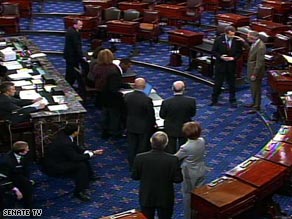
Sen. Sherrod Brown speaks to Senate Majority Leader Harry Reid at right on the Senate floor Friday.

Sen. Sherrod Brown speaks to Senate Majority Leader Harry Reid at right on the Senate floor Friday.

Approved earlier by the House, the plan -- which went through multiple permutations as it bounced back and forth on Capitol Hill over the past week -- now goes to Obama's desk, where he plans to sign it into law by Presidents Day.

Spending in the package includes about $120 billion for infrastructure -- new projects repairing bridges, roads, government buildings and the like -- more than $100 billion for education and $30 billion on energy-related projects that Obama says will create "green jobs."

More than $212 billion goes to tax breaks for individuals and businesses, and another $267 billion is in direct spending like food stamps and unemployment benefits.

The Congressional Budget Office has predicted that the plan will create between 1 million and 3 million jobs.

Most individuals will get a $400 tax credit, and couples will get $800.

The vote by the Senate took several hours longer than a simple roll call of its 100 members generally would. Sen. Sherrod Brown, a Democrat from Ohio, attended a wake for his mother until about 8 p.m. Friday.

Voting began about 5:30 p.m. Then, the Senate chamber sat nearly empty until Brown arrived to vote about five hours later.

He was flown from Ohio to Washington on a plane provided by the White House, which said no commercial flights were available that would have allowed Brown to cast a vote and return to Ohio in time for his mother's funeral Saturday.

Click to read


Wednesday, November 26, 2008

Why the government wants you to be confident

Dr. Boyce Watkins
www.Boycewatkins.com

If you wish to see a video explaining consumer confidence, which is one of the driving issues behind the recent moves in the stock market, please click here.

This has been an interesting week, with auto execs showing up on private jets to request a bailout from the government and the Dow moving to below 8,000 points for the first time in 5 years. I still hold to the fact that this is a great time to get into the stock market if one has never done so before, especially if you are under the age of 50. By the way - please visit our sponsor, GreatBlackSpeakers.com if you are interested in hiring a top notch African American speaker or seeking to become one.

Take care!
Boyce Watkins
http://www.blogger.com/www.boycewatkins.com
Click here to join our money advice list.

=====================================================================================
If you listen carefully to the words of Treasury Secretary Henry “Hank” Paulson and Ben “Big Ben” Bernanke (chairman of the Federal Reserve) you might notice a trend in their language. The word “confidence” is used a lot when they speak. Many of their monetary proposals are not necessarily valuable for their financial power, but also for their psychological power.

Some of you may wonder what confidence has to do with anything. After all, if you’re broke, confidence doesn’t exactly put money in your pocket. If you’re 100 pounds overweight, confidence won’t help you win the Olympic 100 meter dash. When you are flying on a crashing plane, confidence doesn’t keep the plane from slamming into the ground. But confidence is important to an economy, and one of the most significant drivers of economic growth. In fact, over confidence has driven US economic growth for the past 10 years. Here are some reasons that confidence matters in the minds of Hank and Big Ben:

1) Confident consumers spend money

If you think you might lose your job next year, are you going to max out your credit cards? I certainly hope not. If you are worried about being able to make ends meet, are you going to buy that big screen TV? Not unless you want your wife to leave you. So, even if it doesn’t hold any truth, the mere forecast of a weak economy is enough to make many Americans hold off on consumer spending, one of the great driving forces of the American financial system.

2) Confident companies invest money and hire workers

Investments involve risk. Your hunch may work out, and it may not. If you don’t believe the economy is getting better, you are not going to consider taking that risk. No one plans to go to the beach if the weather man says that it’s going to rain. When economic rain is in the forecast, companies pull out their umbrellas and hold off on new projects. This reduces the number of jobs in the economy, because nearly every job created in America is the result of someone making an investment.

3) Confident Americans do not take their money out of banks

In case you didn’t know, your bank does not have your money. Your money is part of a large base of financial capital that is loaned out to individuals and consumers seeking to get a good return on their investment. So, without investing, your bank would have no interest in paying you any interest at all. So if, say, 30% of all customers of the same bank decide to get their money out at the same time, the bank would have serious financial problems. It is a lack of confidence that could cause customers to “run” on their bank and take out their money.

4) Confident investors keep their money in the stock market

The stock market is a place where fortunes are made and lost. Some part of that fortune is psychological, given that no asset can have a value which exceeds that which someone is willing to pay for it. When investors lose confidence, they take their money out of the stock market, and reductions in demand for stocks lead to massive paper losses in the market. Additionally, most Americans are “momentum traders”, meaning that when the market goes up, they tend to buy more, and when it goes down, they tend to sell. History shows that it is actually the opposite approach that tends to work best.

5) Confident banks make loans

Banks have to keep a certain portion of their funds on hand at all times to meet federal requirements. If they are fearful that their customers might come and demand their cash, they hold onto their capital to ensure that it is available. If they are afraid that their borrowing customers will not be able to repay loans due to a weak economy, they also hold back on issuing new loans. The truth is that when economic forecasts are grim, conservative bankers become even more fearful than the rest of us.

The bottom line of this article is that confidence matters. So, the next time you hear Ben Bernanke give a speech, you can be confident that he is going to use language that makes you feel more secure. Whether you choose to believe those words is up to you.

Dr. Boyce Watkins is a Finance Professor at Syracuse University. He does regular commentary in national media, including CNN, BET, ESPN and CBS. For more information, please visit http://www.blogger.com/www.boycewatkins.com. To join our money list, please click here.

Wednesday, October 8, 2008

Black Enterprise: Bill Collectors

Your Black Money: Bill Collectors


One of the groups that was not bailed out during the recent financial crisis has been the American consumer. Congress took care of the firms on Wall Street, but they didn’t take care of the millions of Americans forced to confront the realities of bankruptcy, foreclosure and uncomfortable confrontations with menacing bill collectors. It appears, sadly, that every man and woman must find their own way through this financial tragedy.

Bill Collectors really want their money, like the rest of us. Some of them seem to feel that it’s O.K. to resort to flat out thuggish intimidation to get their money back. That might work on The Sopranos, but it shouldn't work in real life.

Part of the reason abusive bill collectors can have their way with the public is because many citizens do not know their rights. Bill collectors prey on the uninformed in a terrible way: They may threaten to have you arrested, harass your relatives, call all hours of the night, and engage in other types of atrocious behavior to get their money out of your hide.

One woman successfully sued a rogue bill collector after he called her repeatedly with threatening language. The woman, a senior citizen, was told by the man to "Stop with the sob stories and pay your god d*m bill!" This kind of behavior is not acceptable, and bill collector harassment doesn’t have to keep you up at night.

The Federal Trade Commission states that complaints against bill collectors are rising, reaching the highest level they've seen in the past 3 years. Most of the complaints focus on vulgar language, trying to collect more than the amount of the true debt, and extra fees, such as court costs.

You have rights that can protect you from bad and malicious bill collectors. You want to keep these in mind as you work yourself out of debt:

1) There is something called "The Fair Debt Collection Practices Act". If you are not familiar with this document, get familiar with it. You can read it by clicking here.

2) A bill collector cannot contact you at work if your employer does not approve of the contact. Let the bill collector know that this is the case and they must legally stop contacting you at your job.

3) Bill collectors cannot call you before 8 am or after 9 pm. The only exception is if you give them permission to do so.

4) A bill collector can only contact your friends and family if they are trying to find a way to get in touch with you. However, some of them may do this in order to harass or embarrass you. If that is the case, you may want to tell your friends to tell the bill collector, "She does not live here and I do not know how to get in touch with her. Please don't call here anymore." Then, get the bill collector's information from your friend and reach out to them when you can.

5) You can get bill collectors to stop contacting you altogether by sending them a letter telling them to stop. You still must pay the debt, but they won't be calling you during dinner.

6) The bill collector cannot curse at you or use foul language and they must tell the truth about how much you owe. They cannot threaten to sue unless they are serious about it, and they can't touch your 401k or IRA.

7) If the bill collectors call you, you can demand that they send you a written notice of the amount you owe and who you owe the money to. If you do not believe that the debt is yours, you can write a letter to them stating that this is not your debt. They must then send you proof that the debt is actually yours.

If you feel that a debt collector has violated any of these rules, you can contact the Federal Trade Commission at www.ftc.gov. Remember that you are not powerless in this situation.

Dr. Boyce Watkins is a Finance Professor at Syracuse University and author of Financial Lovemaking 101: Merging Asset with Your Partner in Ways that Feel Good. He does regular commentary in national media, including CNN, CBS, NBC and BET. For more information, please visit www.BoyceWatkins.com. This information does not constitute legal advice. For legal advice, please consult your attorney.

Wednesday, September 17, 2008

Black Money 101: A Finance Prof View of our Economy


Dr. Boyce Watkins
www.BoyceWatkins.net

FYI to the fam: I am going to be on the Mike Gallagher Show Friday morning at 10:30 am EST. I don't know much about this guy, but apparently, he is one of the top 10 hosts in the country. The show likely comes on in your city (whatever station the conservatives appear on, I don't listen to them). Monday, I am going to do some commentary for The History Channel on Black Leadership. I'll keep you posted on when that is going to come out.

As I work with my Finance students (you are welcome to hang out with us on our blog at www.DrBoyceFinance.wordpress.com), the economy has been on my mind this week. So, I have shared some thoughts on Financial Leadership in the article below. As I've communicated in the past, strong Financial Leadership in the Black community is the most efficient way for us to fulfill Dr. King's dream. Equality will not come from Capitol Hill....it will come when we have Capital to pay the Bills.


Crash and Burn 101: A Finance Professor’s Take on Our Economy
By Dr. Boyce Watkins

www.BoyceWatkins.com

The United States is respected throughout the world for its powerful economy. We are also, unfortunately, becoming known for our arrogance and financial irresponsibility. During my tenure as a Visiting Scholar with the Center for European Economic Research, one of my colleagues could not understand why American consumers earn more than Germans and pay less in taxes, but have savings rates less than 20% of the average German citizen. Basically, there is a degree of irrational overconfidence and financial carelessness that comes from never having to experience a deep recession first hand. This explains why most baby boomers are not ready for retirement, and why young people spend and borrow like drunken sailors.

American consumers aren’t the only pilots in our crashing economic airplane. U.S. Monetary policy, headed by Federal Reserve Chairman Ben Bernanke, is both art and science, and the apparent success of Alan Greenspan has forced any subsequent Fed Chairman to become a Financial Da Vinci. The saddest part of the Greenspan era, however, is that his choices in the 1990s caused major “speculative bubbles” (inflated asset values in homes and stocks) that have started to burst at the end of this decade. Our leaders create and dictate policies that impact the choices of companies and consumers. Financial leadership has taken the American consumer on a frightening ride, and this is only the beginning.

The US economy saw its financial chickens coming home to roost in 2008, as the recent recession and market downturns have been predicted for years. These “financial chickens” included excessive spending by American consumers, mixed with irresponsible borrowing and lending on the part of both individuals and banks. Personal responsibility is thrown out the window when discussing wealthy and so-called “mainstream” Americans, as financial leaders are called upon to bail out the banks, the consumers and everyone else.

The government bailout package for 2008 has, thus far, included a massive spending bill, one that featured tax refunds and support to help consumers keep their homes, even if they were the causes of their own demise. Another set of “financial steroids” being employed have been the strong and consistent cuts of the Federal Funds rate by Federal Reserve Chairman Ben Bernanke. Bernanke has become known as “Bold Ben” by members of the media, who are consistently stunned by the Chairman’s massive and powerful attempts to control the economic downturn. The latest moves have included the $85 Billion dollar bailout of AIG, an insurance company that has apparently been deemed “too large to fail”. If only our government had the same compassion for the thousands of small businesses across America struggling to find capital to meet short-term financing needs.

Republicans, known for being fiscally responsible, have created budget deficits our country has never seen. Between the Iraq War and the 2008 recession, spending continues to go up, even when tax revenues are expected to go down. The ready availability of additional government borrowing to support our massive spending bills has our financial leaders behaving like teenagers in possession of a “really awesome” American Express card. Like the “blinged out” athlete who thinks his wallet will never be empty, our country may wake up to a grave financial nightmare.

Continuously cutting interest rates may provide additional stimulation to the economy, but the problem is that cutting interest rates, allowing the value of the dollar to slide and frivolous government spending is a recipe for serious, horrific and uncontrollable inflation. Inflation is a Pandora’s Box that doesn’t close nearly as easily as it opens. You think the economy is bad now, you haven’t seen how bad it can get in the face of stagflation (a declining economy with out of control inflation). It’s hard not to feel that “Bold Ben” and “Big Bad Bush” aren’t gambling with our children’s futures and current taxpayer resources.

Sometimes, when you party too hard, you are forced to deal with the hangover. Americans have been blessed with a financial celebration that has lasted over a decade. For the past 15 years, we drank straight out of the liquor bottle and danced with lamp shades on our heads: not saving effectively, spending like crazy and borrowing to cover our financial insanity. But rather than simply allowing the party to end and letting everyone sober up, our financial leadership has taken on the irresponsible behavioral norms of American consumers. Their excessive rate cuts and spending increases have kept us pumped up on Financial Dope in order to avoid the impending crash.

This is not solid financial leadership, and something has GOT to give. Hopefully our leaders will get it.


Dr. Boyce Watkins is a Finance Professor at Syracuse University and author of “Financial Lovemaking 101: Merging Assets with Your Partner in Ways that Feel Good.” He is a regular commentator in national media, including CNN, CBS, NBC, BET and ESPN. For more information, please visit www.BoyceWatkins.net or DrBoyceFinance.Wordpress.com.